Monkey and Banana: A Quirky Display Font for Handmade Makers
I had a fresh batch of soy candles sitting on my worktable, the wax still perfectly smooth, and I was drawing a blank on the label design. The scent was a playful blend of banana cream and toasted coconut, something that deserved a label with real personality, not just another clean sans serif. I opened my folder of creative fonts and there it was: Monkey and Banana. The moment I typed the candle name in that bouncy, slightly offbeat lettering, the whole product clicked. It felt like the label was already grinning at me.
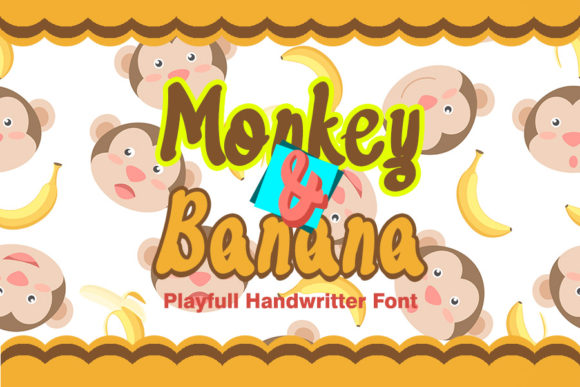
This is exactly the kind of moment that happens when a display font truly matches the spirit of your handmade work. Monkey and Banana is not a quiet, blending-into-the-background typeface. It’s an incredibly quirky and sweet display font that brings a handmade, storybook charm to everything it touches. The letters have a rounded, playful bounce, almost as if they were drawn by someone smiling at their sketchbook. There’s a warmth in the uneven baseline and the generous curves that makes even a simple product tag feel like a tiny piece of art.
Seeing the Font Come to Life on Candle Labels and Packaging
That first candle label was a turning point. I printed a few test strips on matte sticker paper, trimmed them down, and wrapped them around the glass jars. The text read “Banana Cream Daydream” in Monkey and Banana, and the letters seemed to echo the creamy, indulgent feel of the wax inside. Because the font has such a distinct display font personality, it works best for short phrases, product names, and decorative wording. I wouldn’t set an entire paragraph of candle care instructions in it, but for the hero text, it was magical.
For makers who design their own boutique packaging, this typeface can elevate your entire unboxing experience. When you pair it with a clean sans serif font for the smaller details—like weight, burn time, or ingredients—the contrast feels intentional and polished. The font pairing creates a visual rhythm: the playful header catches the eye, and the simple secondary text keeps everything readable and professional. I’ve found that even my market display signs, printed with product names in Monkey and Banana, draw people in from across the aisle.
Stickers, Tags, and the Joy of Small Surface Design
After the candle labels, I got curious about other surfaces. I created a small sticker sheet with encouraging phrases like “You’re Bananas (in a good way)” and “Stay Sweet.” When I cut them on my Cricut, the font held up beautifully. The letters are bold enough to cut cleanly without becoming fragile, though I’d recommend a minimum size of about three-quarters of an inch for intricate details like the tiny tail on the lowercase ‘a’ or the curl inside the ‘y’. For truly tiny stickers, a simpler sans serif might be safer, but for medium to large sticker designs, this font shines.
Gift tags and boutique price tags are another natural home for Monkey and Banana. I printed a run of “Handmade with Love” tags on kraft cardstock, and the white lettering created a subtle, whimsical contrast. The font’s slightly irregular edges feel right at home on textured or natural paper stocks, giving a handmade look that doesn’t feel forced. It’s the kind of creative font that makes a simple paper tag feel like a keepsake.
Greeting Cards, Invitations, and Paper Goods That Tell a Story
I’ve always believed that a card should feel like a hug in an envelope. When I started experimenting with birthday invitations using Monkey and Banana, the design came together faster than I expected. The font set a joyful, celebratory tone instantly. For a child’s birthday party invitation with a jungle or animal theme, the name practically does the selling. But even for more general celebrations, the letters carry a genuine sweetness that works beautifully for baby showers, first birthdays, or just-because cards.
Wedding stationery might not be the first place you’d think of, but I’ve used this typeface for casual, outdoor wedding welcome signs and table number cards. Paired with a delicate script font for the names of the couple, the combination feels fresh and un-stuffy. The handwritten font quality of Monkey and Banana brings a personal, hand-lettered feel that suits barn weddings, garden parties, and intimate celebrations. Because it’s a display font, I keep the text short—single names, a short phrase like “Welcome to Our Beginning,” or a table number—and let the letterforms be the star.
Printable Wall Art and Digital Download Designs
As someone who also sells printables, I’m always looking for typography that can carry a design without needing a lot of extra illustration. Monkey and Banana is one of those rare premium fonts that can stand alone as the focal point. I created a nursery wall art piece with the quote “You Are My Sunshine” set in this typeface, and the letters danced across the page like a sunny morning. The organic, slightly uneven shapes made the digital print feel hand-painted, even when printed on standard matte paper.
For digital download creators, the commercial font licensing is an important checkpoint. Always confirm that the license allows for use in digital products meant for resale, especially if you’re embedding the font in templates, printable art files, or editable PDFs. Most reputable font sources will clearly state the terms, and it’s worth the extra moment to check so you can sell your designs with peace of mind. For physical merchandise like shirts, mugs, or tote bags, the same rule applies—verify that the commercial font license covers those uses, as some desktop licenses have restrictions on print-on-demand or merchandise applications.
Mugs, Shirts, and Tote Bags: The Font on Fabric and Ceramic
I recently pressed a simple phrase onto a tote bag: “I’m Bananas for Books.” The design was uncomplicated—just the words in Monkey and Banana, arched slightly to fit the top of the bag. When you use a font this expressive, you don’t need to over-design. The letterforms themselves become the artwork. On a cream-colored canvas tote, the design felt cheerful and unpretentious, the kind of bag you’d grab for a library run or a farmer’s market visit.
Mugs and shirts follow the same principle. Because the font has a thick, friendly weight, it’s easy to weed if you’re using heat transfer vinyl, and it resists cracking or peeling because there aren’t terribly thin sections. I’d still recommend doing a test press and wash, especially for smaller text, to make sure the curves hold their shape. For t-shirt designs, consider pairing the display font with a simple sans serif font for any secondary message, like an event date or a small tagline, to keep the overall design legible on fabric.
Seasonal Products and Holiday Craft Designs
There’s a special kind of magic in seasonal packaging that uses unexpected typography. I designed a set of holiday tags using Monkey and Banana for a line of hot chocolate gift sets. The phrase “Warm Wishes” in this font, printed on a peppermint-striped background, felt like a nostalgic holiday cartoon come to life. Instead of the typical elegant serif or formal calligraphy, the playful letterforms added a childlike wonder that suited the cozy, casual nature of the gift.
For Valentine’s Day, Easter, or Halloween craft markets, a display font with this much character helps your product stand out on crowded tables. It communicates approachability and warmth before a customer even reads the words. I’ve used it on favor bag stickers, treat box toppers, and even temporary tattoos for a school carnival. In every case, the font added a sense of fun without compromising the feeling that the product was made with care.
Readability, Cutting Machines, and Production Know-How
If you’re using Monkey and Banana with a Cricut or Silhouette, a few small adjustments will save you time and materials. Weld the text before cutting to ensure the connected letter sections—there are natural overlaps in this typeface’s design—cut as one solid shape. For very small cuts, like half-inch stickers or delicate card inserts, consider offsetting the text slightly or thickening the stroke in your software. This extra buffer strengthens the edges and prevents tearing when you’re weeding or peeling.
On printed cards and labels, the font is delightfully readable at sizes you’d expect for a title or focal point, typically 18 points and above. For body text or full ingredient lists, I’ll always switch to a clean, open serif font or sans serif font for contrast. This isn’t a flaw—it’s exactly how a display font is meant to be used. The high-impact letterforms are designed to catch attention, and giving them breathing room with more neutral secondary text makes a product look thoughtfully designed rather than chaotic.
Building Brand Consistency and Shop Identity
Using the same quirky display font across your product labels, social media graphics, and packaging materials helps build a consistent brand identity without much extra effort. When customers see that signature lettering style, they begin to associate it with your shop’s personality. I’ve noticed that repeat customers will recognize my table at artisan markets not just by the products, but by the cohesive typography choices that run through every tag, sign, and listing photo.
For online sellers, integrating Monkey and Banana into product listing images or social media posts gives your grid a distinctive visual signature. You can create reusable templates for promotions, new product announcements, or holiday sales, all tied together by that one expressive typeface. This doesn’t mean using it for every word—overuse would dilute the charm—but letting it anchor your most important headings and price toppers creates a reliable, recognizable look.
Checking Styles, File Formats, and Licensing Before Selling
Before you launch a new product line with this font, take a moment to explore what’s included in the font file. Some versions of quirky display typefaces come with alternates, ligatures, or even a few bonus swashes that can completely change the personality of a single letter. Simply toggling an alternate ‘g’ or a more playful ampersand can make your candle label or invitation feel even more custom. If the font supports multilingual characters, you’ll also have the flexibility to create designs for a broader audience.
Finally, double-check the file formats you need. For design software like Adobe Illustrator or Photoshop, OTF or TTF files work seamlessly. If you’re creating editable templates for customers who use free programs, you’ll want to embed or at least note the font requirements. And as mentioned earlier, the commercial font license is non-negotiable when you’re selling physical products, digital downloads, or merchandise. A proper license protects your small business and ensures you’re supporting the type designer who created the tool you’re building your brand with.
There’s something beautiful about finding a creative font that feels like it was made for your products. Monkey and Banana has that elusive blend of sweetness, quirk, and genuine warmth that turns a simple label, a blank card, or an empty tote bag into something memorable. It’s a typeface that doesn’t just say the words—it adds the smile.